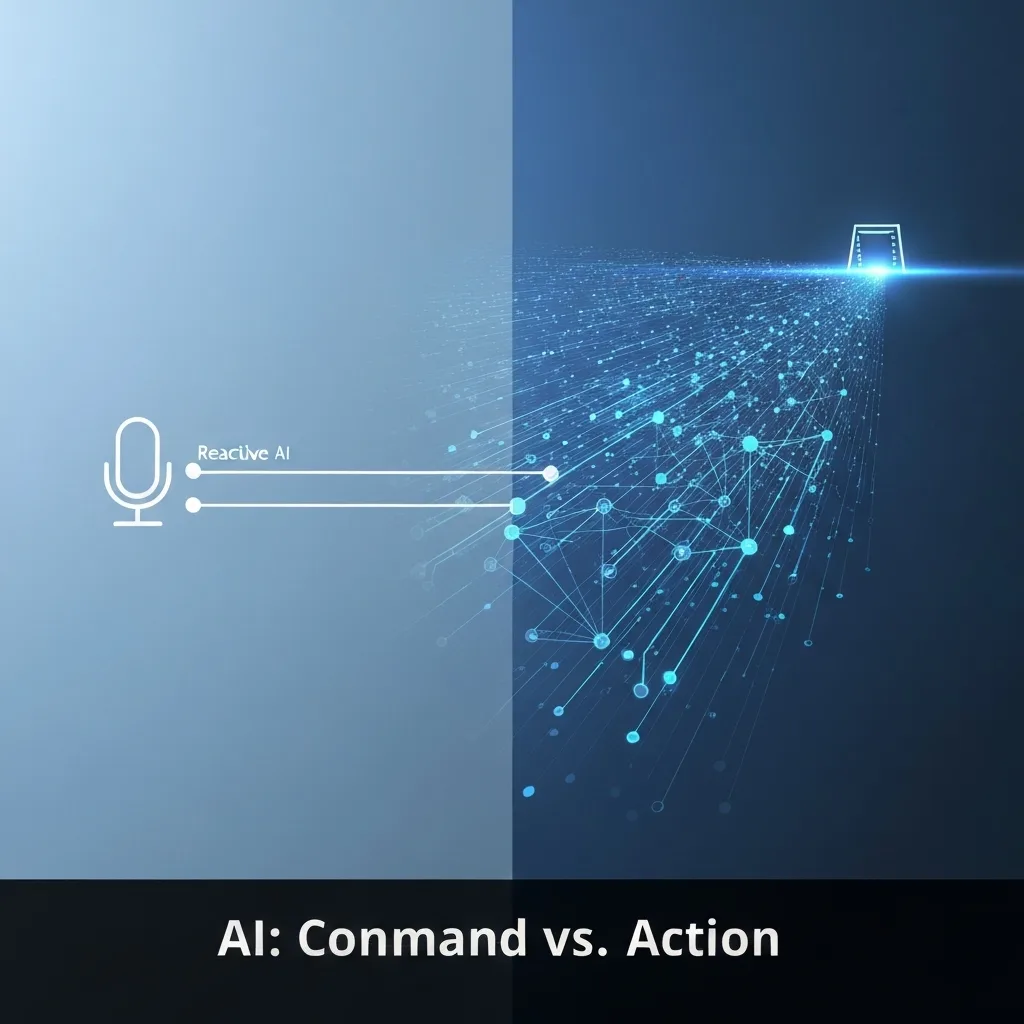
The world of artificial intelligence is filled with buzzwords, and it’s easy to get lost. We have AI assistants like Siri in our pockets, we hear about the creative power of Generative AI, and now, a new term is emerging: agentic AI. Is this just another marketing phrase, or does it represent a true leap forward? The confusion is understandable, as most explanations focus on complex features rather than a clear, foundational definition. This article will cut through the noise. We will provide the definitive explanation of what agentic AI is, how it fundamentally differs from the traditional AI assistants you use every day, and why it’s poised to become the next evolution in digital autonomy.
### Table of Contents
By [Author Name], AI Ethicist and Researcher
## Understanding Agentic AI: Beyond Simple Commands
To grasp the future of artificial intelligence, we first need to get past the buzzwords. According to ReliaQuest, agentic AI is an autonomous system that fundamentally shifts from reactive tools to proactive partners by acting independently to achieve complex, goal-oriented tasks.
### What is Agentic AI? A Clear Definition
So, what is agentic AI? At its core, an agentic AI is an autonomous system that can perceive its environment, make decisions, and take actions to achieve specific goals without direct human instruction for every step. Think of it less like a tool and more like a delegate.
The agentic AI meaning is rooted in the concept of “agency.” While a traditional AI like a calculator waits for you to input `2+2`, an agentic AI is given a goal, like “Plan my weekend trip to the mountains,” and it independently figures out the necessary steps—researching locations, checking weather, booking accommodation, and creating an itinerary. This proactive, multi-step problem-solving is the essence of the agentic AI definition.
### How Agentic AI Works: The Core Principles
IBM states that agentic AI operates through a continuous, adaptive cycle including goal setting, perception, planning, action, and self-correction.
1. Goal Setting: It starts with a high-level objective defined by the user (e.g., “Find the best deal on a new laptop that meets my needs”).
2. Perception: The AI gathers information from various sources—websites, APIs, documents—to understand the current situation and available options.
3. Planning: It breaks down the main goal into a sequence of smaller, actionable sub-tasks (e.g., list required specs, search e-commerce sites, compare prices, read reviews).
4. Action: The AI executes these tasks autonomously. This could involve browsing websites, filling out forms, or interacting with other software.
5. Self-Correction: It continuously evaluates its progress, learns from the results of its actions, and adjusts its plan to overcome obstacles and stay on track toward the final goal. For instance, an agent tasked with booking a trip might detect a flight cancellation and automatically search for alternative routes or dates, adjusting the entire itinerary without needing user intervention.
## The Key Differences: Agentic AI vs. Traditional AI Assistants
The most common point of confusion is understanding how agentic systems differ from the AI we use every day. The distinction between reactive assistants, creative generators, and proactive agents is crucial and highlights a major leap in capability. The table below breaks down these core differences.
| AI Type | Core Function | Autonomy Level | Example Task |
| — | — | — | — |
| Traditional Assistant
(e.g., Siri, Alexa) | Executes single, well-defined commands. | Reactive: Waits for specific instructions. | “Set a timer for 10 minutes.” |
| Generative AI
(e.g., ChatGPT) | Creates new content (text, images, code). | Prompt-Driven: Generates output based on input. | “Write a marketing email.” |
| Agentic AI | Executes multi-step tasks to achieve a goal. | Proactive: Plans and acts autonomously. | “Launch a marketing campaign.” |
## Real-World Impact: Examples and Benefits of Agentic AI
Amazon Web Services highlights that agentic AI is being applied in various real-world scenarios, demonstrating its transformative potential across industries.
### Practical Examples of Agentic AI in Action
The examples of agentic AI are growing every day. These agentic AI tools showcase its power to automate complex workflows:
1. Travel Planning: An agent can be tasked with “Plan a 5-day trip to Tokyo for under $2000.” It will then find flights, compare hotels, suggest itineraries, and present you with a complete, bookable plan.
2. Market Research: A business can deploy an agent to “Analyze our top three competitors’ online presence.” The AI would then browse their websites, social media, and news mentions, and compile a detailed report on their marketing strategies.
3. Personal Task Management: An agent could manage your calendar, automatically scheduling meetings by negotiating times with other people’s agents, booking necessary travel, and ordering lunch to arrive on time.
These agentic AI use cases go far beyond the simple 10 uses of artificial intelligence we’re familiar with, moving from basic assistance to comprehensive delegation.
### The Core Benefits of Agentic AI
The shift towards agentic systems offers clear advantages for both individuals and businesses. The primary benefits of agentic AI include:
* Increased Productivity: By automating complex, multi-step tasks, agents free up human users to focus on strategic, creative, and high-level thinking.
* Enhanced Efficiency: Agents can perform tasks faster and more accurately than humans, operating 24/7 without fatigue.
* Complex Problem-Solving: They can analyze vast amounts of data and execute complex plans that would be overwhelming for a person to manage manually.
* Personalization: An agent can learn your preferences and goals over time, becoming a highly personalized assistant that anticipates your needs.
## Frequently Asked Questions
### What is the main difference between agentic AI and traditional AI?
The main difference is autonomy and proactivity. A traditional AI assistant (like Siri or Alexa) reacts to specific, single-step commands (“What time is it?”). An agentic AI is given a high-level goal (“Plan my schedule for next week”) and can independently create and execute a multi-step plan to achieve it without further instruction.
### Is Siri an example of agentic AI?
No, Siri is a traditional AI assistant, not an agentic AI. While advanced, it operates on a command-and-response basis. It cannot autonomously plan and execute a series of actions to achieve a complex goal. It can set a timer, but it can’t plan an entire event on its own.
### What are the key benefits of using agentic AI tools?
The key benefits of using agentic AI tools are significantly increased productivity by automating complex workflows, enhanced efficiency as agents can work 24/7 without error, and the ability to solve complex problems by delegating research, planning, and execution to an autonomous system.